
Delving into Private equity investment, this introduction immerses readers in a unique and compelling narrative, with engaging language that sparks curiosity. Private equity investment offers a lucrative opportunity for investors to strategically allocate capital for high returns. As we explore the intricacies of this investment approach, we uncover the key components that set it apart from traditional investment avenues.
The process of private equity investment involves meticulous planning, thorough due diligence, and calculated risk-taking. Understanding the nuances of different types of private equity investments is crucial for investors looking to diversify their portfolios and maximize returns. Let’s delve deeper into the world of private equity investment to uncover its benefits, challenges, and success stories.
PRIVATE EQUITY
Private equity refers to investments made into privately-held companies or enterprises that are not publicly traded on the stock exchange. The main aim of private equity is to provide capital to these companies in exchange for ownership stakes, with the goal of generating high returns on investment over a specified period.
Typical Structure of a Private Equity Investment
Private equity investments typically involve a group of investors pooling their capital together to form a fund. This fund is then managed by a private equity firm, which identifies potential investment opportunities and manages the investments on behalf of the investors. The fund may invest in a variety of companies, ranging from startups to established businesses, with the aim of improving the company’s performance and ultimately selling it for a profit.
- Investment Period: Private equity investments are typically long-term in nature, with a typical investment horizon of 5-7 years.
- Active Involvement: Private equity firms often take an active role in the management of the companies they invest in, providing strategic guidance and operational support.
- Exit Strategy: The ultimate goal of a private equity investment is to exit the investment by selling the company to realize a profit. This can be done through an initial public offering (IPO), a sale to another company, or a management buyout.
Key Characteristics of Private Equity
Private equity investments are distinct from other types of investments, such as stocks or bonds, due to several key characteristics:
- Illiquidity: Private equity investments are illiquid, meaning that investors cannot easily sell their stakes in a company before the agreed-upon exit period.
- High Returns: Private equity investments have the potential to generate higher returns compared to traditional investments due to the active involvement of the private equity firm in improving the company’s performance.
- Risk: Private equity investments are considered high-risk investments, as they involve investing in privately-held companies that may not be as transparent or regulated as public companies.
PRIVATE EQUITY INVESTMENT PROCESS
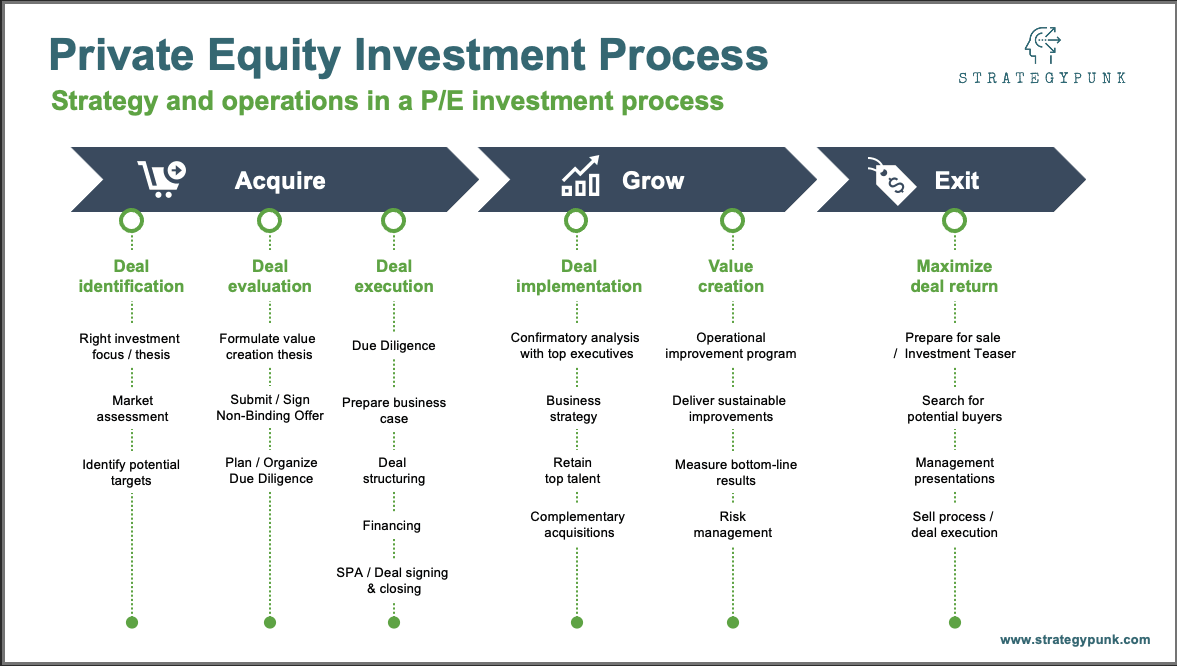
Private equity investment process involves several key steps that private equity firms follow to identify, evaluate, and invest in potential opportunities. Let’s dive into the details of how private equity investments are carried out.
Identifying Potential Investment Opportunities
Private equity firms employ various strategies to identify potential investment opportunities. This may include:
- Building relationships with industry experts, investment bankers, and other professionals to source deals.
- Scanning the market for companies that fit their investment criteria, such as growth potential, industry relevance, and profit margins.
- Attending industry conferences, networking events, and trade shows to stay updated on emerging trends and opportunities.
Due Diligence Process
Due diligence is a crucial step in the private equity investment process where thorough research and analysis are conducted to assess the potential risks and returns of an investment. This may involve:
- Reviewing financial statements, performance metrics, and projections to evaluate the company’s financial health and growth prospects.
- Conducting interviews with the company’s management team, key employees, and customers to gain insights into the business operations and market positioning.
- Assessing the competitive landscape, regulatory environment, and potential risks that could impact the investment’s success.
TYPES OF PRIVATE EQUITY INVESTMENTS
Private equity investments come in various forms, each with its own unique characteristics and risks. Let’s explore some of the most common types of private equity investments and compare their associated risks.
Venture Capital
Venture capital involves investing in startups or early-stage companies with high growth potential. These investments are typically high risk but offer the possibility of significant returns if the company succeeds. Venture capitalists often provide not only funding but also guidance and expertise to help the company grow.
Leveraged Buyouts
Leveraged buyouts (LBOs) involve acquiring established companies using a significant amount of borrowed funds. The goal is to restructure the company, increase its value, and eventually sell it for a profit. LBOs can be risky due to the high levels of debt involved, but successful deals can generate substantial returns for investors.
Private Equity Real Estate
Private equity real estate investments involve acquiring and managing properties such as commercial real estate, residential developments, or industrial properties. These investments can provide steady cash flow through rental income and appreciation in property value over time. However, they are subject to risks such as market fluctuations and changes in property values.
Distressed Debt
Distressed debt investments involve buying the debt of struggling companies at a discount with the aim of turning a profit through debt restructuring or bankruptcy proceedings. These investments carry high risk due to the financial instability of the companies involved, but successful distress debt deals can result in significant returns.
Examples of Successful Private Equity Investments
One notable example of a successful private equity investment is the acquisition of tech company Dell by Silver Lake Partners in 2013. The deal allowed Dell to go private, restructure its operations, and focus on growing its enterprise solutions business. The investment paid off handsomely when Dell returned to the public markets in 2018 at a much higher valuation.Overall, private equity investments offer a diverse range of opportunities for investors, each with its own set of risks and potential rewards.
It’s crucial for investors to carefully evaluate the risks and rewards of each type of investment before committing capital.
BENEFITS AND CHALLENGES
Investing in private equity offers several advantages for investors, such as higher potential returns, portfolio diversification, and the opportunity to actively participate in the growth of private companies. However, along with these benefits, there are also challenges that investors may encounter, including illiquidity, high risk, and the complexity of the investment process. Mitigating these risks is crucial for successful private equity investments.
Advantages of Investing in Private Equity
- Higher Potential Returns: Private equity investments have the potential to generate higher returns compared to traditional investments like stocks and bonds.
- Portfolio Diversification: Investing in private equity allows investors to diversify their portfolio and reduce overall risk.
- Active Participation: Investors can actively participate in the growth and strategic decisions of the private companies they invest in, potentially adding value and achieving better outcomes.
Challenges in Private Equity Investments
- Illiquidity: Private equity investments are illiquid, meaning that investors may not be able to easily sell their shares or access their capital when needed.
- High Risk: Private equity investments carry a high level of risk due to the nature of investing in private companies, which may not always succeed or generate expected returns.
- Complexity: The process of investing in private equity can be complex, requiring thorough due diligence, negotiation skills, and ongoing monitoring of investments.
Mitigating Risks in Private Equity Investments
- Due Diligence: Conduct thorough due diligence on potential investment opportunities to assess the risks and potential returns.
- Diversification: Diversify your private equity portfolio across different industries, stages of companies, and geographies to reduce risk exposure.
- Active Monitoring: Regularly monitor the performance of your private equity investments and stay informed about the companies and market trends.
In conclusion, private equity investment presents a unique opportunity for investors seeking high returns through strategic investments. By navigating the complexities of this investment avenue and leveraging due diligence and risk mitigation strategies, investors can unlock the full potential of private equity. As we reflect on the advantages, challenges, and success stories associated with private equity investment, it becomes clear that this approach offers a path to financial growth and success in the ever-evolving investment landscape.
Key Questions Answered
What are the key characteristics of private equity investments?
Private equity investments are characterized by longer holding periods, active involvement in management, and a focus on creating value in portfolio companies through strategic initiatives.
How can investors mitigate risks in private equity investments?
Investors can mitigate risks in private equity investments by conducting thorough due diligence, diversifying their portfolios, and partnering with experienced private equity firms with a proven track record.
What is the typical structure of a private equity investment?
A typical structure of a private equity investment involves raising capital from investors, identifying potential investment opportunities, conducting due diligence, negotiating terms, and actively managing the investment to maximize returns.


