
Delving into Private equity fundraising, this introduction immerses readers in a unique and compelling narrative, with engaging information about the process, challenges, and strategies involved in raising private equity funds.
Private equity fundraising plays a crucial role in the investment landscape, attracting investors through various strategies while navigating regulatory environments to ensure compliance.
PRIVATE EQUITY
Private equity refers to investments made into privately-held companies with the goal of acquiring equity ownership. This form of investment is significant in the financial landscape as it provides capital to companies that are not publicly traded, allowing them to expand, restructure, or improve operations. Private equity investors typically seek to increase the value of their investments over time through various strategies.
Typical Structure of a Private Equity Fund
Private equity funds are typically structured as limited partnerships, where the investors are known as limited partners and the fund managers are the general partners. Limited partners provide the capital for the fund, while general partners manage the investments and operations of the fund. The fund has a specific investment period during which it acquires companies, aims to improve their performance, and eventually exit the investments to realize returns for the investors.
Difference Between Private Equity and Hedge Funds
Private equity and hedge funds are both alternative investment vehicles, but they differ in their investment strategies and structures. Private equity funds typically invest in private companies with a focus on long-term value creation through active management and operational improvements. In contrast, hedge funds invest in a variety of assets, including publicly traded securities, and often use leverage and derivatives to generate returns.
Additionally, private equity funds have a lock-up period where investors cannot easily withdraw their capital, while hedge funds usually allow for more frequent redemptions.
PRIVATE EQUITY FUNDRAISING
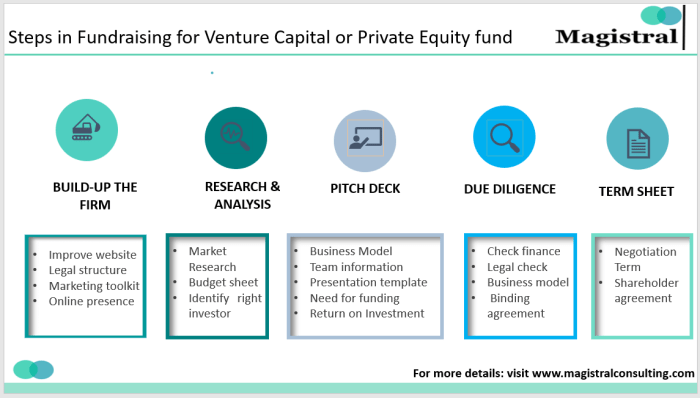
Private equity fundraising involves a series of strategic steps from sourcing investors to closing a fund. It is a critical process for private equity firms to secure capital for investments and operations.
Sourcing Investors
Private equity firms typically source investors through various channels such as institutional investors, high-net-worth individuals, family offices, and pension funds. They may also leverage their existing network and relationships to attract potential investors.
- Private equity firms conduct roadshows and presentations to showcase their investment strategies and track record to potential investors.
- They may also engage in targeted marketing campaigns to reach out to specific investor groups.
- Building a strong reputation and demonstrating a successful track record are key factors in attracting investors.
- Establishing trust and transparency in the fundraising process is crucial for securing commitments from investors.
Strategies to Attract Investors
Private equity firms employ various strategies to attract investors and secure commitments for their funds. These strategies are designed to showcase the firm’s expertise, track record, and potential for returns.
- Offering attractive investment opportunities with the potential for high returns is a key strategy to attract investors.
- Providing detailed due diligence and investment analysis to demonstrate the firm’s ability to identify and capitalize on lucrative opportunities.
- Customizing investment structures and terms to meet the needs and preferences of different types of investors.
- Building strong relationships and maintaining open communication with investors throughout the fundraising process.
Challenges Faced During Fundraising
Private equity firms encounter various challenges during the fundraising process that can impact their ability to secure commitments from investors.
- Market volatility and economic uncertainty can make investors hesitant to commit capital to private equity funds.
- Increasing competition among private equity firms for investor capital can make it challenging to stand out and attract commitments.
- Regulatory changes and compliance requirements can add complexity and uncertainty to the fundraising process.
- Managing investor expectations and addressing concerns about fees, performance, and risk management are critical challenges for private equity firms.
INVESTOR RELATIONS
Maintaining strong relationships with investors in the private equity industry is crucial for the success of a firm. Investors provide the capital needed for investments, and their trust and satisfaction are essential for long-term partnerships.Private equity firms communicate with investors regularly during and after fundraising through various channels. This includes providing updates on investment performance, financial reports, and opportunities for engagement.
Clear and transparent communication is key to building trust and confidence among investors.Investor relations teams play a vital role in ensuring investor satisfaction and retention. They act as the primary point of contact for investors, addressing their inquiries, concerns, and providing necessary information. These teams also organize meetings, events, and reports to keep investors informed and engaged throughout the investment lifecycle.
REGULATORY ENVIRONMENT
The regulatory environment plays a crucial role in shaping the landscape of private equity fundraising. Different jurisdictions have varying regulations that govern how private equity firms can raise capital, impacting their fundraising strategies and operations.
Regulations in Different Jurisdictions
Private equity fundraising is subject to a range of regulations depending on the jurisdiction in which the firm operates. For example, in the United States, the Securities and Exchange Commission (SEC) regulates private placements under Regulation D of the Securities Act. This regulation imposes restrictions on how private equity firms can solicit investors and limits the number of non-accredited investors who can participate in a fundraising round.In Europe, private equity firms must comply with the Alternative Investment Fund Managers Directive (AIFMD), which sets out rules for the marketing and management of alternative investment funds.
This directive aims to harmonize the regulation of alternative investment funds across the European Union, ensuring transparency and investor protection.
Impact on Fundraising Strategies
Compliance with regulations significantly impacts the fundraising strategies of private equity firms. Firms need to navigate complex regulatory requirements, which can increase costs and administrative burdens. Moreover, regulatory restrictions can limit the pool of potential investors and affect the structure of fundraising vehicles.To ensure compliance, private equity firms often engage legal and compliance professionals to navigate the regulatory landscape effectively.
This adds an additional layer of due diligence and oversight to the fundraising process, influencing how firms approach investor relations and deal structuring.
Future Regulatory Changes
The regulatory frameworks governing private equity fundraising are subject to change, reflecting evolving market dynamics and investor demands. Potential changes in regulations could include increased disclosure requirements, stricter investor protections, or amendments to tax treatment for private equity investments.Firms need to stay abreast of regulatory developments and adapt their fundraising strategies accordingly to remain compliant and competitive in the evolving regulatory environment.
In conclusion, Private equity fundraising is a complex yet rewarding endeavor, requiring strong investor relations, strategic planning, and adherence to regulations for successful fundraising campaigns.
FAQs
What sets private equity fundraising apart from other investment vehicles?
Private equity fundraising involves sourcing investors and closing funds through unique strategies tailored to attract specific types of investors, unlike hedge funds or other investment vehicles.
How do private equity firms navigate regulatory environments during fundraising?
Private equity firms analyze regulations across different jurisdictions to ensure compliance, impacting their fundraising strategies and potential changes in regulatory frameworks.
What role do investor relations teams play in private equity fundraising?
Investor relations teams are crucial in maintaining strong relationships with investors, communicating effectively during and after fundraising to ensure investor satisfaction and retention.


