
Embark on a journey through the intricate world of private equity due diligence process, where we unravel the key steps and considerations involved in this crucial financial procedure.
Explore the nuances of conducting due diligence in private equity and the impact it has on investment decisions.
PRIVATE EQUITY
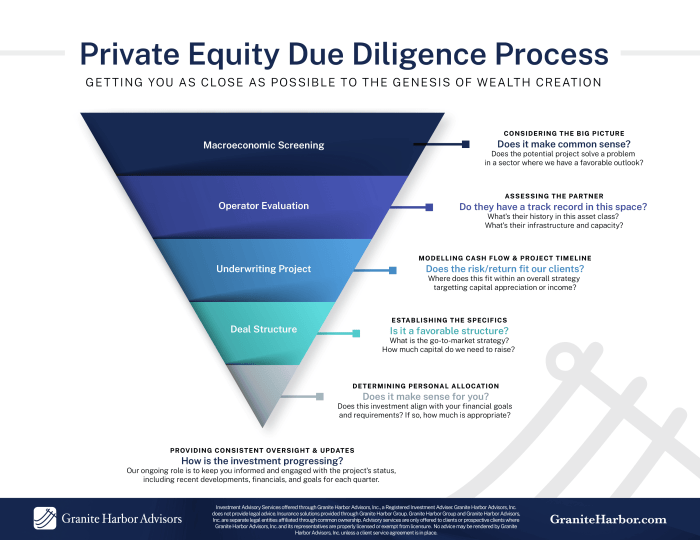
Private equity refers to investments made into privately held companies or those that are not publicly traded on a stock exchange. It involves investing in companies that are not listed on the stock market, with the aim of providing capital to help these businesses grow and expand.
Key Characteristics of Private Equity Investments
- Long-Term Investments: Private equity investments typically have a longer investment horizon compared to other forms of investments, such as public equities.
- Illiquid Assets: Investments in private equity are considered illiquid as they are not easily traded on the open market.
- Active Involvement: Private equity firms often take an active role in the management and operations of the companies they invest in, aiming to improve performance and drive growth.
- Potential for High Returns: Due to the higher risk associated with private equity investments, there is also the potential for higher returns compared to traditional investments.
Role of Private Equity Firms in the Market
Private equity firms act as financial intermediaries that invest capital in private companies with the goal of generating returns for their investors. These firms play a crucial role in providing funding to businesses that may not have access to traditional forms of financing, such as bank loans or public markets.
Typical Investment Horizon for Private Equity Funds
Private equity funds typically have a longer investment horizon, ranging from 5 to 10 years or more. This extended timeframe allows private equity firms to implement strategic changes, improve operational efficiency, and ultimately increase the value of their investments before exiting the companies for a return.
Private Equity Due Diligence Process
Private equity due diligence is a crucial step in the investment process where potential risks and opportunities associated with a target company are thoroughly assessed and evaluated. This process involves a comprehensive investigation and analysis of the target company’s financial, operational, legal, and market aspects to make informed investment decisions.
Primary Objectives of Conducting Due Diligence
- Assess the target company’s financial health and performance to determine its value and growth potential.
- Evaluate the operational efficiency and management capabilities of the target company to identify areas for improvement.
- Understand the legal and regulatory compliance of the target company to mitigate any potential legal risks.
- Analyze the market dynamics and competitive landscape to assess the target company’s positioning and growth prospects.
Importance of Due Diligence in Mitigating Risks
Due diligence plays a crucial role in mitigating risks associated with private equity investments by providing investors with a comprehensive understanding of the target company’s strengths, weaknesses, opportunities, and threats. By conducting due diligence, investors can identify potential red flags, verify the accuracy of information provided by the target company, and make well-informed investment decisions to minimize the likelihood of unexpected issues or losses.
Key Steps Involved in the Due Diligence Process
- Preparation and Planning: Define the scope of due diligence, assemble a due diligence team, and develop a detailed plan for the investigation.
- Financial Due Diligence: Review the target company’s financial statements, performance metrics, and forecasts to assess its financial health and viability.
- Operational Due Diligence: Evaluate the target company’s operational processes, supply chain, technology infrastructure, and key performance indicators to identify operational risks and opportunities.
- Legal Due Diligence: Conduct a thorough review of the target company’s contracts, agreements, intellectual property rights, and compliance with laws and regulations to identify any legal risks or liabilities.
- Commercial Due Diligence: Analyze the target company’s market position, competitive landscape, customer base, and growth potential to assess its commercial viability and growth prospects.
- Final Due Diligence Report: Compile all findings and recommendations into a comprehensive due diligence report for investors to make informed investment decisions.
Financial Analysis in Due Diligence
Financial analysis plays a crucial role in the due diligence process of private equity investments. It involves a comprehensive examination of the target company’s financial information to assess its performance, stability, and potential for growth.
Types of Financial Documents Reviewed
- Income statements
- Balance sheets
- Cash flow statements
- Financial projections
- Audited financial statements
Financial Metrics and Investment Decisions
- Return on Investment (ROI) and Return on Equity (ROE) are key metrics that influence investment decisions.
- Debt levels, liquidity ratios, and profit margins are also important factors considered in financial analysis.
- Valuation multiples such as Price/Earnings (P/E) ratio and Enterprise Value (EV) to Earnings Before Interest, Taxes, Depreciation, and Amortization (EBITDA) are used to determine the attractiveness of an investment.
Financial Red Flags in Due Diligence
- Significant fluctuations in revenue or profit margins
- High levels of debt or financial leverage
- Inconsistencies in financial statements or accounting practices
- Lack of transparency in reporting
- Unexplained or suspicious expenses
Legal and Compliance Due Diligence
Legal and compliance due diligence play a crucial role in the private equity investment process. It involves a thorough examination of legal documents and ensures that the target company complies with all relevant laws and regulations. Failing to conduct proper legal and compliance due diligence can lead to significant risks and potential legal issues for the investor.
Key Legal Documents Reviewed
During the due diligence process, key legal documents that are typically reviewed include:
- Articles of Incorporation
- Bylaws
- Contracts and Agreements
- Intellectual Property Rights
- Regulatory Filings
Role of Legal Experts
Legal experts play a crucial role in the due diligence process by providing valuable insights and identifying any potential legal risks or liabilities associated with the target company. They help ensure that the investment is legally sound and that all legal aspects have been carefully considered before proceeding with the deal.
Impact of Compliance Issues
Compliance issues can have a significant impact on investment outcomes in private equity. Failure to address compliance issues can result in fines, penalties, and even legal actions against the investor or the target company. It is essential to thoroughly assess compliance issues during due diligence to mitigate risks and ensure a successful investment.
In conclusion, the private equity due diligence process serves as a critical tool in assessing risks, ensuring informed investment choices, and ultimately maximizing returns in the dynamic landscape of financial markets.
FAQ Compilation
What are the primary objectives of conducting due diligence in private equity?
The primary objectives include assessing risks, evaluating the target company’s financial health, and uncovering any potential red flags that may impact the investment.
How does legal and compliance due diligence impact private equity investments?
Legal and compliance due diligence ensures that the investment is in line with regulatory requirements, mitigates legal risks, and protects the interests of the investors.


