
Embark on a journey into the world of Leveraged buyouts (LBOs), where financial strategies collide and opportunities abound. Dive deep into the complexities and nuances of this intriguing topic as we uncover the key aspects that shape the landscape of LBO transactions.
Leveraged Buyouts (LBOs)
In the finance industry, Leveraged Buyouts (LBOs) involve acquiring a company using a significant amount of borrowed funds or debt. The assets of the company being acquired and sometimes the assets of the acquiring company are used as collateral for the loans. The goal of an LBO is to allow the acquiring company to make a large acquisition without committing a lot of its own capital.
Key Players in a Typical LBO Deal
In a typical LBO deal, the key players involved are:
- Private Equity Firm: The entity that acquires the target company using a combination of equity and debt.
- Lenders: Financial institutions that provide the debt financing for the LBO.
- Target Company: The company that is being acquired through the LBO process.
- Management Team: Often involved in the buyout to run the target company post-acquisition.
Comparison with Other Corporate Takeovers
LBOs differ from other forms of corporate takeovers in that they are typically funded mostly by debt, whereas other takeovers may involve a mix of cash, stock, and debt. LBOs also often involve the target company’s management team as partners in the deal, aligning their interests with those of the private equity firm.
Advantages and Disadvantages of LBO Transactions
Advantages of LBO transactions include:
- Increased Potential Returns: By using leverage, the returns to the equity investors can be amplified if the company performs well post-acquisition.
- Alignment of Interests: Involvement of the target company’s management team can align interests and improve operational performance.
Disadvantages of LBO transactions include:
- High Levels of Debt: The high debt levels used in LBOs can increase financial risk and put pressure on the acquired company’s operations.
- Exit Challenges: Exiting an LBO investment can be challenging due to the need to find a buyer willing to pay a premium for the company.
Process of a Leveraged Buyout
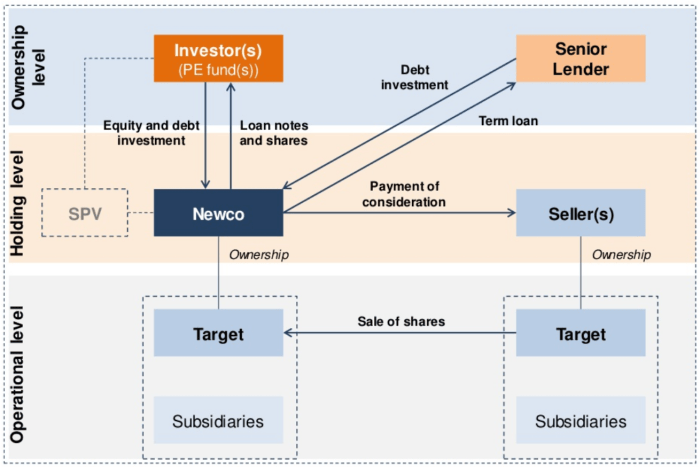
Executing a leveraged buyout involves several key steps that Artikel the process from start to finish.
Role of Private Equity Firms
Private equity firms play a crucial role in facilitating LBO transactions by providing the necessary capital and expertise to acquire a target company.
Due Diligence Process
The due diligence process in LBOs is a thorough examination of the target company’s financial, operational, and legal aspects to assess risks and opportunities associated with the acquisition.
Financing Options
- Senior Debt: This type of financing carries lower interest rates and is secured by the assets of the target company.
- Mezzanine Financing: It combines debt and equity components, offering higher returns to investors but with increased risk.
- Equity Contribution: Private equity firms invest their own capital in the deal, aligning their interests with the success of the acquisition.
Success Factors in Leveraged Buyouts
Successful leveraged buyouts (LBOs) are often attributed to a combination of various key factors that contribute to their overall success. It is crucial for investors and firms involved in LBOs to understand these factors in order to maximize the potential for a successful outcome.
Operational Improvements Post-LBO
After the acquisition through an LBO, one of the critical success factors is the implementation of operational improvements within the target company. This involves streamlining processes, optimizing efficiency, and enhancing overall performance to increase profitability and value. Operational improvements can include cost-cutting measures, restructuring of operations, and strategic initiatives to drive growth.
- Implementing a strong management team with a clear vision and strategic direction
- Enhancing operational efficiencies through process optimization and automation
- Investing in technology and innovation to stay competitive in the market
- Developing and executing a robust growth strategy to expand market share
Operational improvements post-LBO play a crucial role in unlocking value and driving sustainable growth within the acquired company.
Challenges Faced Post-LBO and Mitigation Strategies
While LBOs offer significant opportunities for value creation, companies often face challenges post-acquisition that can impact the success of the transaction. Common challenges include high levels of debt, integration issues, market volatility, and changing regulatory environments. To mitigate these challenges, companies need to adopt proactive strategies and effective risk management practices.
- Managing debt levels through refinancing or restructuring to improve financial flexibility
- Ensuring seamless integration of the acquired company into the existing operations
- Adapting to market changes and volatility through agile decision-making and strategic planning
- Staying compliant with regulatory requirements and adapting to evolving legal frameworks
By addressing these challenges proactively and implementing effective mitigation strategies, companies can navigate the complexities of post-LBO integration and drive long-term success.
Successful LBO Case Studies
Examining successful LBO case studies provides valuable insights into the factors that set them apart and contributed to their success. Some notable examples include the acquisitions of Hertz, Toys “R” Us, and Dell, which showcased effective operational improvements, strategic decision-making, and value creation strategies.
- Hertz: Implemented a comprehensive cost-cutting strategy and expanded its service offerings to drive profitability
- Toys “R” Us: Restructured its operations and focused on enhancing the customer experience to revitalize the brand
- Dell: Leveraged its expertise in technology to diversify its product portfolio and capitalize on emerging market trends
Private Equity
Private equity refers to investments made into privately held companies or assets that are not publicly traded on a stock exchange. Private equity firms raise capital from institutional investors and high-net-worth individuals to acquire equity ownership in companies. These firms then use this capital to invest in and potentially improve the performance of the companies they acquire.
Types of Private Equity Investments
- Venture Capital: Investing in early-stage, high-growth companies with the potential for significant returns.
- Growth Capital: Providing capital to established companies looking to expand or restructure.
- Distressed Debt: Acquiring the debt of financially troubled companies at a discount.
- Mezzanine Financing: Offering debt that can be converted into equity in a company.
Strategies of Private Equity Firms
- Operational Improvements: Implementing changes to increase efficiency and profitability.
- Financial Engineering: Optimizing capital structure and cash flows to enhance returns.
- Industry Expertise: Leveraging knowledge and networks to drive growth and value creation.
- Exit Strategies: Planning for profitable exits through IPOs, mergers, or acquisitions.
Impact of Private Equity
- Job Creation: Private equity investments can lead to job growth through expansion and operational improvements in portfolio companies.
- Economic Growth: Private equity firms contribute to economic development by fostering innovation and entrepreneurship.
- Value Creation: Private equity investments can generate substantial returns for investors and drive overall market performance.
In conclusion, Leveraged buyouts (LBOs) offer a unique perspective on financial acquisitions, with a balance of risks and rewards that define the success of such transactions. Explore further to grasp the intricacies and potential of LBO deals in shaping the business world.
FAQ Insights
What are the advantages of LBO transactions?
LBO transactions can offer increased returns for investors due to the use of leverage, potential tax advantages, and the ability to restructure the acquired company efficiently.
How do private equity firms add value to portfolio companies?
Private equity firms add value through strategic guidance, operational improvements, access to networks, and capital infusion, aiming to enhance the performance and growth of portfolio companies.
What distinguishes successful LBO case studies?
Successful LBO case studies often showcase effective post-acquisition strategies, operational enhancements, strong management teams, and the ability to navigate challenges in the market.


