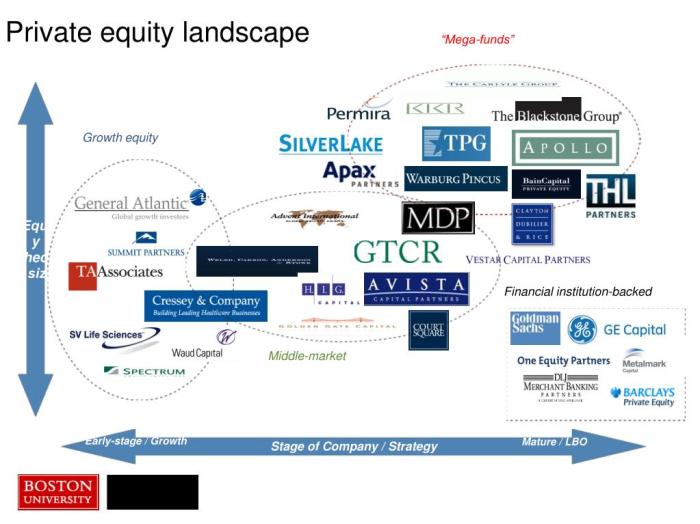
As Private equity sectors takes center stage, this opening passage beckons readers with casual formal language style into a world crafted with good knowledge, ensuring a reading experience that is both absorbing and distinctly original.
Private equity investments play a crucial role in various sectors, driving growth and innovation while offering unique opportunities for investors.
PRIVATE EQUITY
Private equity refers to investments made in privately-owned companies or assets with the aim of providing capital, strategic guidance, and operational support to help the company grow and become more profitable. Unlike public equity, where shares are traded on stock exchanges, private equity investments are not publicly traded and are typically held for a longer period.Private equity firms play a crucial role in the financial market by providing capital to companies that may not have access to traditional sources of funding, such as bank loans or public markets.
These firms often take a more active role in the management of the companies they invest in, working closely with management teams to improve operations, expand the business, and ultimately increase value.Private equity investments differ from other types of investments in several ways. Firstly, they are illiquid, meaning that investors cannot easily buy or sell their stake in a private company as they can with publicly traded stocks.
Secondly, private equity investments are typically long-term in nature, with investors committing their capital for several years before realizing returns. Finally, private equity investments often involve higher levels of risk and potential returns compared to more traditional investments.
Role of Private Equity Firms in the Financial Market
Private equity firms serve as a crucial source of capital for companies looking to grow or undergo significant changes. By providing funding, expertise, and strategic guidance, these firms help drive innovation, create jobs, and stimulate economic growth. Additionally, private equity investments can offer diversification benefits to investors seeking exposure to a different asset class beyond stocks and bonds.
Differences in Private Equity Investments
Illiquidity
Private equity investments are not easily tradable like publicly traded stocks, requiring investors to commit their capital for an extended period.
Long-term focus
Private equity investments often involve holding periods of several years, allowing firms to implement strategic changes and drive value over time.
Higher risk and return potential
Due to the nature of investments in private companies, private equity offers the potential for higher returns but also comes with increased risk compared to other investment options.
Private Equity Sectors

Private equity investments are commonly made in various sectors based on the potential for growth, profitability, and market trends. Private equity firms carefully analyze different sectors before deciding on their investment strategy.
List of Common Sectors for Private Equity Investments
- Technology
- Healthcare
- Consumer goods
- Financial services
- Energy
- Real estate
Criteria for Selecting Sectors for Investment
Private equity firms consider several factors when selecting sectors for investment, including:
- Market potential and growth prospects
- Competitive landscape and barriers to entry
- Regulatory environment and political stability
- Industry trends and disruptions
- Alignment with the firm’s expertise and investment strategy
Risks and Rewards of Investing in Different Sectors
Investing in different sectors comes with its own set of risks and rewards. Some sectors may offer high returns but also carry higher risks, while others may provide stable returns with lower volatility. It is essential for private equity firms to carefully assess the risk-return profile of each sector before making investment decisions.
Technology Sector
Private equity investments in the technology sector play a crucial role in driving innovation, growth, and competitiveness. Tech companies often require significant capital to fund research and development, scale operations, and expand their market reach. Private equity firms provide the necessary funding and expertise to help these companies achieve their full potential.
Significance of Private Equity Investments in Technology
Private equity investments enable tech companies to accelerate their growth, develop cutting-edge products and services, and compete in a rapidly evolving market. By injecting capital and strategic guidance, private equity firms help tech startups and established companies alike navigate challenges and seize opportunities for expansion.
Examples of Successful Tech Companies Funded by Private Equity
- Uber: Private equity firms invested in Uber during its early stages, fueling its rapid expansion into a global ride-hailing giant.
- SpaceX: Elon Musk’s aerospace company received private equity funding, allowing it to develop groundbreaking technologies and achieve milestones in space exploration.
- Palantir Technologies: This data analytics company received private equity investments to support its growth and innovation in the field of big data analysis.
Trends and Challenges in the Technology Sector Impacting Private Equity Investments
The technology sector is characterized by rapid advancements, changing consumer preferences, and intense competition. Private equity firms must stay abreast of emerging trends such as artificial intelligence, cybersecurity, and digital transformation to identify lucrative investment opportunities. However, challenges such as regulatory changes, market volatility, and disruptive technologies can pose risks to private equity investments in the tech industry.
Healthcare Sector
Private equity plays a significant role in the healthcare industry, providing capital to support growth and innovation in various healthcare companies.
Value Addition by Private Equity Firms
- Private equity firms bring operational expertise to healthcare companies, helping them improve efficiency and streamline processes.
- Through strategic guidance and industry knowledge, private equity firms help healthcare companies expand their market reach and enhance their competitive edge.
- Private equity investment can also facilitate technology adoption and digital transformation in healthcare organizations, leading to improved patient care and outcomes.
Regulatory Considerations and Trends
- Regulatory changes in the healthcare sector, such as healthcare reform policies and data privacy regulations, can impact private equity investments in healthcare.
- Increased focus on value-based care and patient outcomes is driving private equity firms to seek investments in companies that demonstrate strong performance metrics and quality of care.
- Emerging trends like telemedicine, personalized medicine, and AI-driven healthcare solutions are attracting private equity interest in innovative healthcare startups.
Private equity sectors offer a diverse landscape of investment opportunities, each with its own set of risks and rewards. Understanding these sectors is key to making informed investment decisions in the dynamic world of private equity.
Questions Often Asked
What are some common sectors for private equity investments?
Private equity investments are commonly made in sectors such as technology, healthcare, consumer goods, and financial services.
How do private equity firms select sectors for investment?
Private equity firms typically evaluate sectors based on growth potential, market trends, competition, regulatory environment, and the expertise of the management team.
What are the risks associated with investing in different sectors?
Investing in different sectors carries risks such as market volatility, regulatory changes, competition, and industry-specific challenges that can impact returns on investment.


