
With Buyout firms at the forefront, this paragraph opens a window to an amazing start and intrigue, inviting readers to embark on a storytelling casual formal language style filled with unexpected twists and insights.
Buyout firms play a crucial role in the financial market, engaging in various transactions and setting themselves apart from other financial institutions. Let’s delve deeper into their world.
Buyout Firms
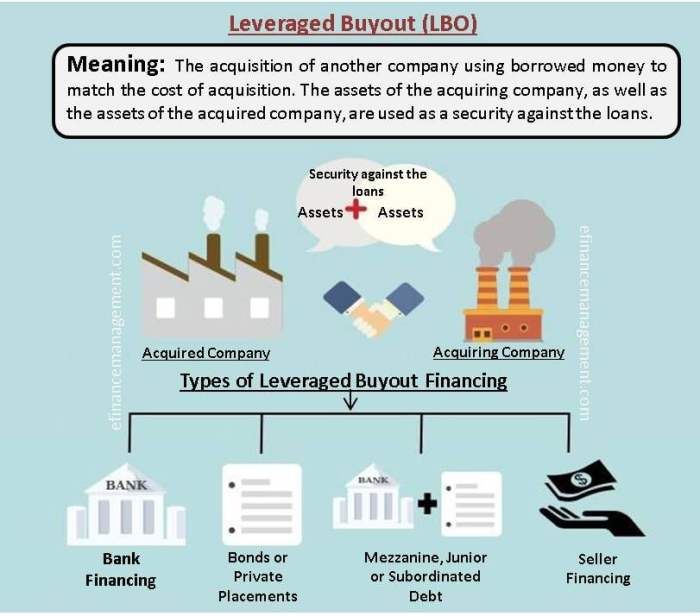
Buyout firms play a significant role in the financial market by acquiring controlling interests in companies and restructuring them to improve their financial performance.
Types of Transactions
- Leveraged Buyouts (LBOs): Buyout firms use a significant amount of debt to finance the acquisition of a company, with the expectation of improving its operations and selling it at a profit.
- Management Buyouts (MBOs): In this type of transaction, the existing management team of a company, along with a buyout firm, acquires the company from its current owners.
- Private Equity Investments: Buyout firms invest in private companies with the goal of improving their operations and eventually exiting the investment at a profit.
Comparison with Other Financial Institutions
- Hedge Funds: Buyout firms typically take a hands-on approach in managing the companies they invest in, while hedge funds focus on generating high returns through various investment strategies.
- Investment Banks: Buyout firms are involved in acquiring and managing companies, while investment banks primarily provide financial advisory services, underwriting, and trading.
- Venture Capital Firms: While venture capital firms invest in early-stage companies with high growth potential, buyout firms target established companies with the potential for operational improvements.
Private Equity
Private equity refers to investments made into privately-held companies or assets that are not publicly traded on the stock exchange. These investments are made by private equity firms, which raise capital from institutional investors and high net-worth individuals to acquire equity stakes in companies with the aim of generating a return on investment.
Significance of Private Equity
Private equity plays a crucial role in the investment landscape by providing capital to companies that may not have access to traditional forms of financing. These investments often involve active management and operational improvements to enhance the value of the company, leading to potential long-term growth and profitability.
Examples of Successful Private Equity Investments
- One of the most notable examples of successful private equity investments is the acquisition of Hertz by Clayton, Dubilier & Rice, which resulted in substantial returns for the firm.
- Another successful investment is the acquisition of Burger King by 3G Capital, which saw the fast-food chain’s value increase significantly under new ownership.
Strategies Used by Private Equity Firms
Private equity firms employ various strategies to maximize returns on their investments, including:
- Leveraged Buyouts (LBOs): Acquiring a company using a significant amount of debt to amplify returns.
- Operational Improvements: Implementing changes to streamline operations, cut costs, and increase efficiency.
- Growth Capital: Providing capital to fuel expansion and growth opportunities for the company.
- Exit Strategy: Planning for a profitable exit through either an IPO, sale to another company, or a merger.
In conclusion, buyout firms are essential players in shaping the financial landscape, with unique strategies and approaches that set them apart. Understanding their role is key to navigating the complexities of the investment world.
Expert Answers
What is the primary role of buyout firms?
Buyout firms focus on acquiring majority stakes in companies to restructure them and drive profitability.
How do buyout firms differ from other financial institutions?
Unlike traditional banks, buyout firms are involved in acquiring and restructuring businesses rather than offering conventional banking services.


